
The Iran War Just Proved Why P.I.P. Is the Smartest Income Play in America
On February 28, 2026, Iran's Supreme Leader Ayatollah Khamenei was killed. What happened next changed everything for income investors.
For three months, the Strait of Hormuz was closed. Iran blocked 20% of global oil. Prices hit $117 a barrel. The world panicked.
And through all of it — every escalation, every failed ceasefire, every $100+ oil day — America’s pipeline operators kept collecting fees. They kept paying distributions. They kept putting cash in their investors’ pockets.
Now, with the peace deal announced and Hormuz reopening, something important has become clear:
The thesis behind P.I.P. isn’t just theory anymore. It’s been battle-tested.
U.S. pipeline companies collect fees every time gas or oil moves through their infrastructure — regardless of commodity prices, regardless of geopolitics. When the world needed energy during the crisis, more volume flowed through American pipelines.
During the war, the average MLP in P.I.P. gained 8.4%. The S&P fell -4.1% over that same period. That's a 12.5% outperformance gap — in the middle of an armed conflict.
Pipeline companies collect the toll — no matter what's happening in the world. They cashed the checks while the world scrambled for supply. And now that peace has arrived, the structural demand driving their profits hasn't slowed down one bit.
How P.I.P. MLPs Performed During the Iran War
All 11 P.I.P. MLPs vs. the S&P 500 — Feb 28 to June 14, 2026
| Company | Gain Since Feb 28 |
|---|---|
| MLP #1 (PAA) | +15.3% |
| MLP #2 | +12.7% |
| MLP #3 | +11.8% |
| MLP #4 | +9.6% |
| MLP #5 | +8.4% |
| MLP #6 | +7.2% |
| MLP #7 | +5.9% |
| MLP #8 | +3.1% |
| MLP #9 | +2.4% |
| MLP #10 | +1.8% |
| MLP #11 | +0.9% |
| Benchmark Index (S&P 500) | -4.1% |
Price performance during the Iran-Hormuz conflict (Feb 28 – June 14, 2026). With the peace deal now in effect, prices may adjust as oil stabilizes. Past performance is not indicative of future results.
Now, here’s the part that should excite you.
With the peace deal signed and Hormuz reopening, some investors might think the energy play is over. They’d be wrong.
The war was never the reason to own P.I.P. It was just proof that P.I.P. works. The real reason — the structural reason — is still accelerating: 3,000 AI data centers under construction. $500 billion in infrastructure spending this year alone. A natural gas demand curve that’s going vertical.
The war showed the world how dependent we are on the exact infrastructure P.I.P. owns. Peace doesn't change that. If anything, it confirms it.
And here's the part most people are missing: with oil settling back to $80 and MLP unit prices cooling from their wartime highs, today may actually be a better entry point than it was three months ago. Same income. Same 42 paydays. Potentially better prices.
The numbers have made their case. Now you have to make yours.
Will you enroll in P.I.P. and collect 42 payouts a year from America's pipeline operators — or will you watch from the sidelines while others collect?
Enroll in P.I.P. — Battle-Tested, Now Historically Yielding 8–10% a Year
P.I.P. is one of the core strategies published inside The Kiyosaki Letter — helping everyday Americans build real income from real assets.
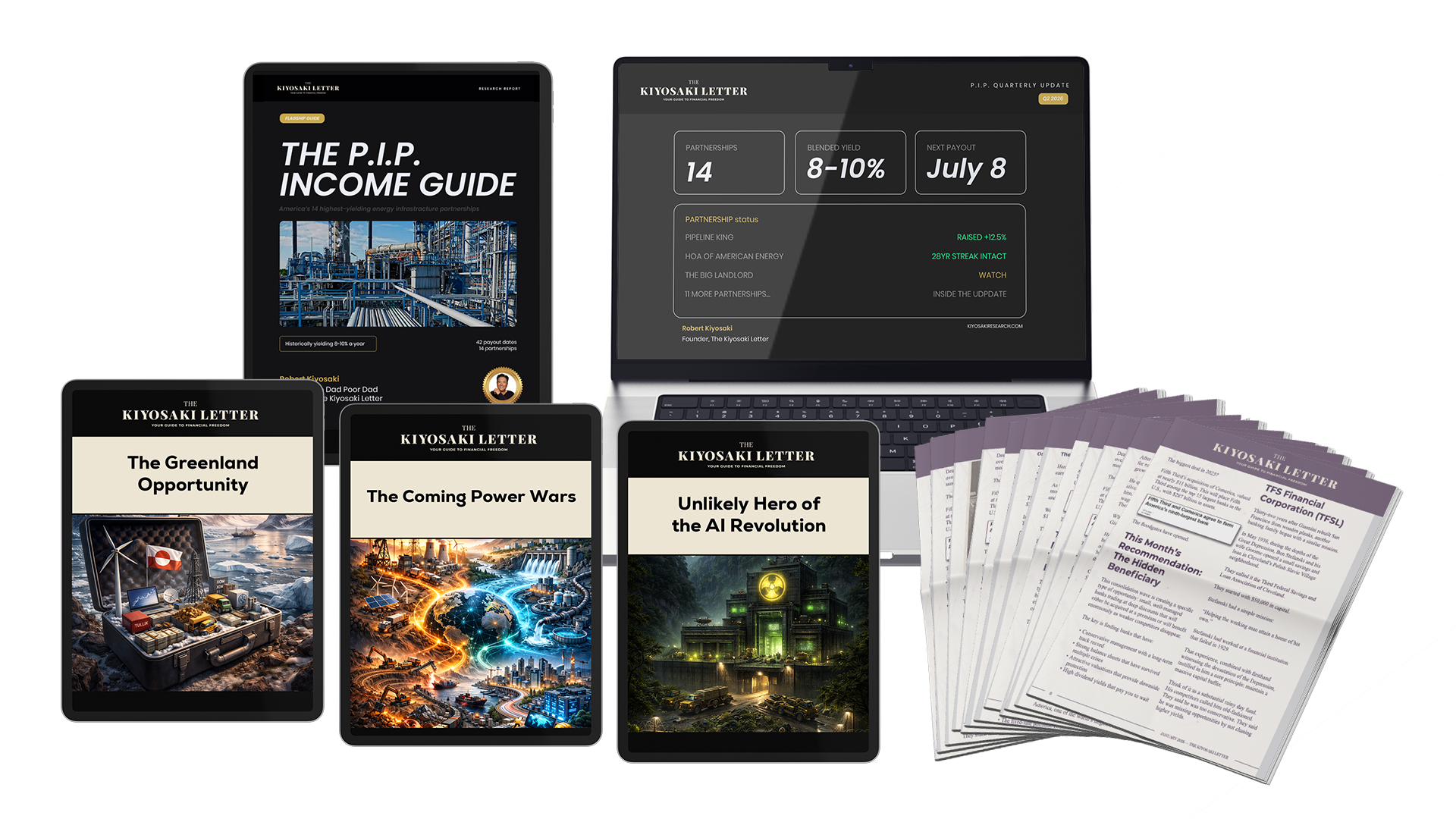
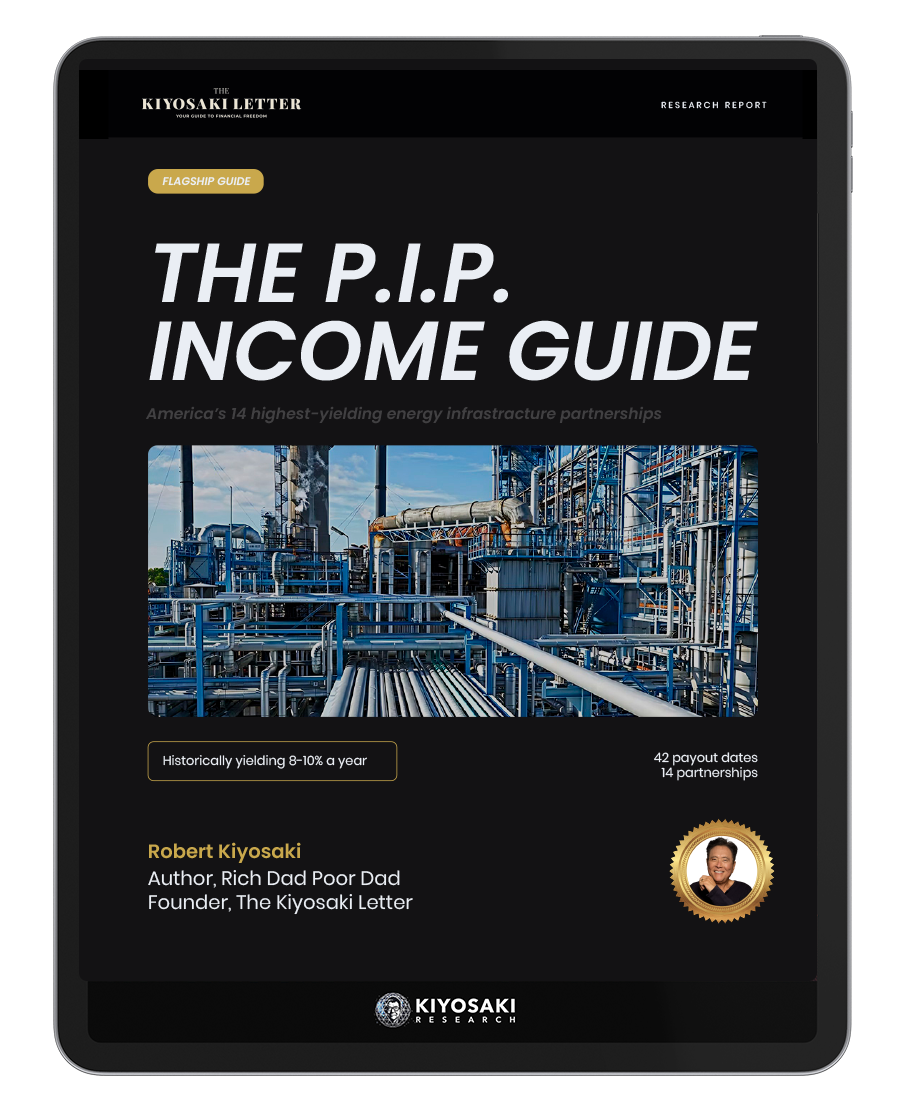
Complete profiles of all 14 partnerships — what they do, how they make money, distribution histories, financial health metrics, and the methodology for building your own energy income portfolio.
America is building a second energy grid to power 3,000+ AI data centers — and one overlooked sector is quietly becoming its most critical fuel source. This report names the specific company positioned to profit from the greatest energy build-out in human history, and why it's already paying investors automatic income.
The Iran war revealed which companies thrive when global energy supply is disrupted — and which get left behind. This report details the four critical chokepoints — energy, water, minerals, and infrastructure — that will determine which companies dominate as AI and domestic energy demand accelerate through 2027 and beyond.

While U.S. acquisition of Greenland remains unlikely, new opportunities to secure rare earth metals, expand U.S. military presence and establish stronger economic/shipping ties have emerged. In this report I'll tell you what three anchor companies I believe will provide you with stable exposure to the situation.
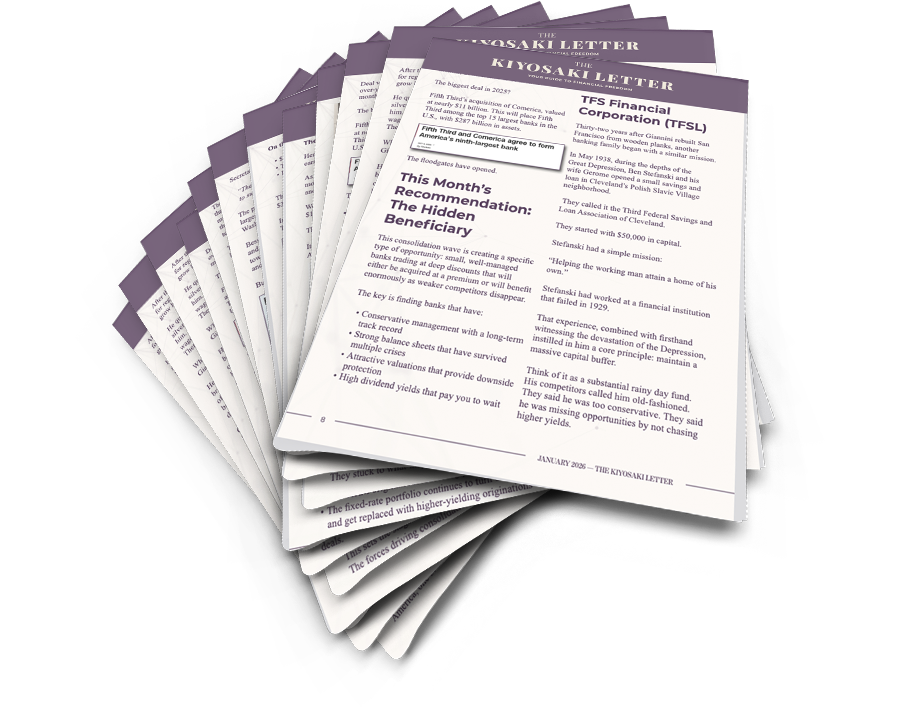
My flagship publication comes out once a month. Each issue tackles one big idea that most people are missing — and shows you how to profit from it. Since launching we have an 80% win rate.
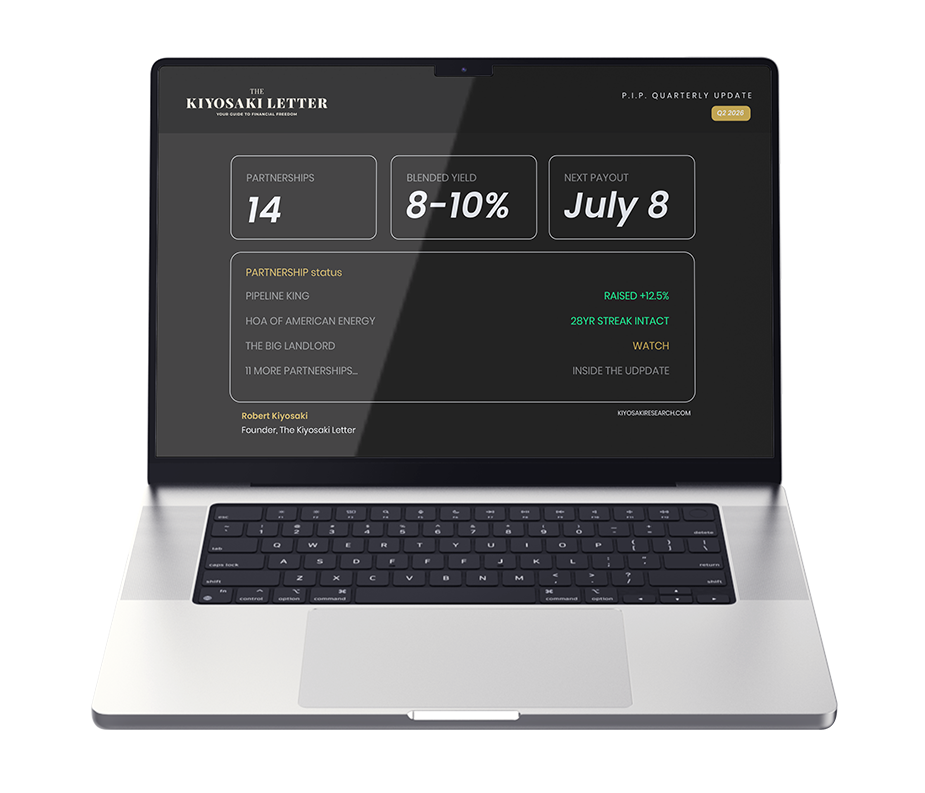
Every quarter, my team publishes a state-of-the-market update covering all 14 P.I.P. partnerships. What's changed, where the best value is, and what macro trends are affecting the sector.

FREE Copy of FAKE by Robert Kiyosaki
In FAKE, Kiyosaki exposes the difference between real assets and fake ones — fake money, fake teachers, and fake assets that are quietly draining the wealth of everyday Americans. The P.I.P. Income Guide was built on the principles inside this book: hard assets, real income, American energy.
Please Select Your Membership Level
Iron-Clad 30-Day Guarantee
Try The Kiyosaki Letter for a full 30 days. Review the income guide, read the bonus reports, track the 42 paydays. If you're not completely satisfied for any reason, contact our team for a full refund of your purchase price — no questions asked. All digital reports are yours to keep as our gift to you.