Our Readers Had Two Weeks Before the Last Deal Filled. This Is the Next One:

The security world just named the week we lived through.
"BLACK OCTOBER"
The internet just had one of its worst weeks in years. Here is what the headlines were really showing you.

Robert Kiyosaki
I have spent most of my life telling people the same uncomfortable thing. The system will not warn you before it breaks.
The schools do not teach you to read the warning signs, and the people in charge have every reason to tell you everything is fine.
So before anyone says one word to you about an opportunity, I want you to do what I did this week. Look at the headlines.
The people who defend the internet for a living have already given last week a name. They are calling it Black October.
In a matter of days:
PHP, the software behind a massive share of the world's websites, rushed out emergency fixes for two flaws researchers called among the most severe in software history.
Governments urged businesses to patch immediately or pull their sites offline entirely.
America's biggest banks discovered AI agents they never authorized operating inside customer accounts, and started walling them off.
One hacker used AI agents to break into more than one hundred companies, household names among them, at a reported cost of about fifty dollars per break-in.
A twelve-year-old flaw rated a perfect ten out of ten was patched in GitLab, the software thousands of companies use to build their own software.
A certificate authority's keys were found so weak that the world's major browsers moved to block it, because anyone holding those keys could impersonate a trusted website.
And the FBI and CISA warned that a single ransomware crew has now hit more than six hundred critical infrastructure organizations across four continents.
One week.
I take no pleasure in weeks like this one. But I have learned to pay attention to them. And here is the detail my team cannot stop talking about.
Amazon's threat intelligence network caught attackers USING the PHP exploit on October 17. Four days before the world was told it existed. Nobody has explained that gap.
Somebody is operating ahead of the defenders. Not by hours. By days.
The security industry will tell you Black October was a coincidence of calendars. A disclosure wave. Each story unrelated to the next.
Taken one at a time, that is a fair reading. My rich dad taught me something different. He taught me to watch what is actually happening, not what the official story says is happening.
My team does not take them one at a time. They look at AI finding the holes, AI walking through them, attackers armed before disclosure, and the most powerful institutions on earth quietly spending billions against a deadline, and they see something that has a name in intelligence circles.
Probing. The small, deniable intrusions that come before a main event. Testing the doors. Timing the guards. Learning which locks give.
I am not telling you Black October was a rehearsal for Q-Day. Nobody can tell you that, and you should walk away from anyone who claims to know.
Here is what I can tell you. Every lock that failed last week was a lock working exactly as designed, defeated one at a time.
Q-Day is the date the man building the machines says is three or four years out, when the mathematics behind ALL of those locks stops holding at once.
Black October is what one bad week looks like under today's rules.
The story my team is about to show you is about what happens when the rules themselves expire, and the one company they believe is standing on the right side of that date.
The question is not whether you saw last week's headlines.
It is whether you understood what they were showing you.
Because one of the most famous investors on television apparently did. And what he did next made no sense to anyone... until you see the date his reasoning points to.
Chris Carroll
Jim Cramer announced he is selling his Bitcoin.
Not because of a crash.
Not because of regulation.
Because of a warning from the CEO of IBM.
It started on CNBC, when Cramer asked Arvind Krishna a direct question.
Krishna runs one of the most advanced quantum computing programs on earth.
Could quantum computers crack the encryption protecting Bitcoin?
His answer:

Give yourself three or four years...
I would get rather paranoid about it.
Cramer’s reaction, on air: three or four years is not that long. People should listen to that.
And days later, he acted.
I am going to sell my Bitcoin.
I’m Chris Carroll. I’m the publisher of Kiyosaki Research.
I’ve spent my entire career in financial publishing, watching what happens when the system reaches a turning point.
And I can tell you what that headline actually is…
It’s the mainstream waking up to something a small group of people have been preparing for, for years.
The threat has a name.
Q-Day
The day quantum computers break the encryption protecting your bank account, your brokerage account, and your Bitcoin.
Jim Cramer read about it in a headline. And sold.
But before that headline ever ran, three of the four research analysts on our team were already in a room at NASDAQ, in New York, with a private company that had solved this problem.
Companies at this stage decide very carefully who they let in early. They opened their engineering team to ours for a full day.
A company that has already stopped 341 million attacks on live infrastructure.
It hasn’t gone public yet.
In my world, everything comes down to one question.
Were you in the room? Or did you read about it the next day?
Today, our research team is going to show you what they found in that room.
What you do with it will be up to you. But you deserve to see all of it first.
Cramer moved to protect his capital. Our team went looking for the company institutions may be forced to pay when the system changes.
Chris Carroll
On June 12th of this year, SpaceX went public at a $1.77 trillion valuation, the largest IPO in the history of financial markets.
The whole world watched it happen. And the question I heard over and over, from readers and strangers alike, was the same one.
How do I get into something like that BEFORE it goes public?
Because the pre-IPO shares were reserved for venture capitalists, institutional funds, and people with the right connections and the right net worth.
Not you. Not most of America.
But here’s what the media missed: SpaceX was never just a rocket company. It’s an infrastructure company.
It provides Starlink, satellite internet across more than 160 countries.
Infrastructure is where the real money gets made.
Not the product you see. The pipes the product runs through.
And right now, the most critical infrastructure on earth, the encryption protecting every bank account, every crypto wallet, every government database, is about to be broken.
The event has a name.
Q-Day
In my career as a publisher, thousands of deals have crossed my desk. Most of them go nowhere.
The window into this one is finally open, and the allocation is first-come, first-served.
Now. Before we go further, there’s someone who asked to say something first.
You know him.
Robert Kiyosaki
I’m Robert Kiyosaki.
You probably know me from Rich Dad Poor Dad. But you might not know the man behind this presentation. So give me one minute.
Chris Carroll co-founded Paradigm Press and helped build it into the largest franchise in Agora’s history.
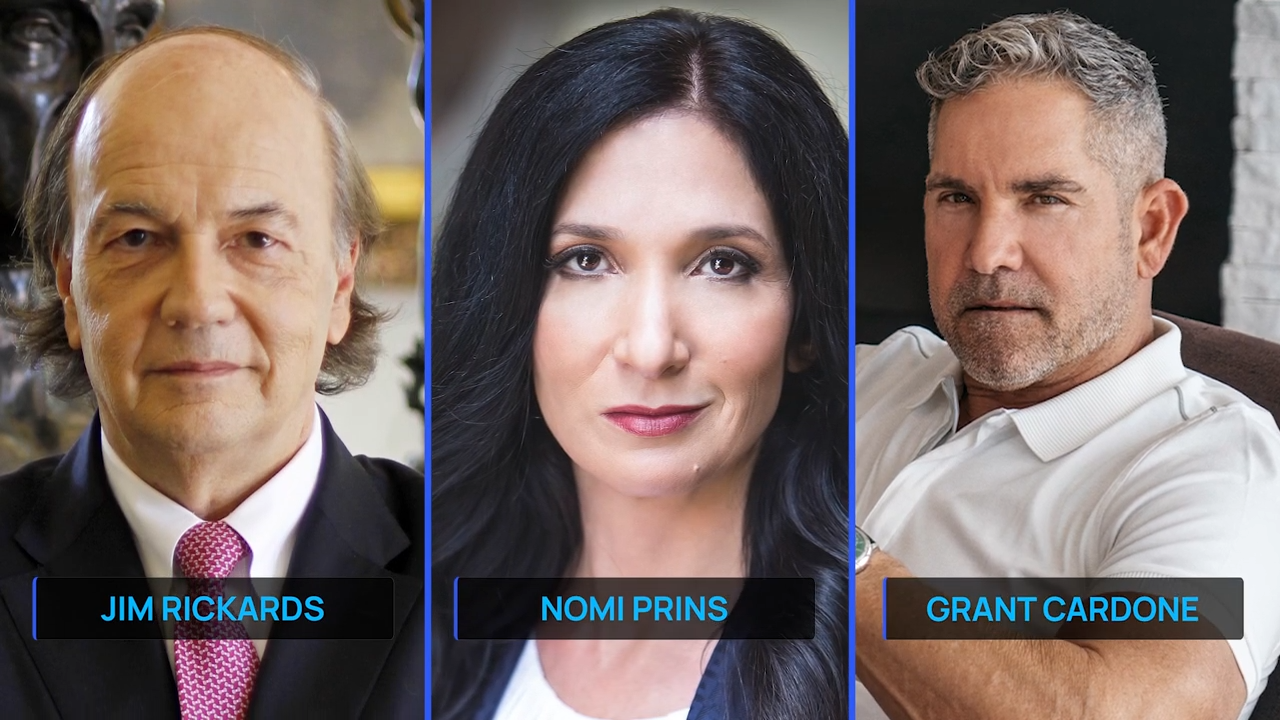
Jim Rickards. Nomi Prins. Grant Cardone. Me.
Yes, Chris published my research at Paradigm.
And when he left to build his own company, I chose to work with him again.
That should tell you something.
Today, he publishes Kiyosaki Research. I’m one of his editors.
My world is educating people about gold, silver, real estate, and the big macro forces behind them. Before I write about a mine, I go stand in it. I’ve walked gold mines and lithium mines with Marin Katusa, because that’s the standard around here. You don’t write about what you haven’t touched.
So when the IMF calls something a systemic risk to the financial system... and Citigroup says one attack on one bank could knock trillions out of GDP... my radar goes off.
That’s not merely a technology story. It’s a money story. The biggest one of the decade.
But the technology behind it? Not my lane. I know what I know, and I know what I do not.
But what I do know is this.
Every time the financial system has been forced to change, and I’ve lived through a few, the biggest fortunes went to the people who understood what was coming while everyone else was still arguing about whether it was real.
That moment is sitting in front of you right now.
I will not tell you to invest. That decision is yours, and it should be. But I wouldn’t close this page before you understand what this team found.
They did the work. They sat with the company. I trust Chris with my own name.
Let them show you.
Chris Carroll
Thank you, Robert.
Robert just told you how we met. So let me tell you how I work.
My entire career has been built on one skill.
Finding the right people before the world catches on.
And I’ve spent most of that career saying no.
That’s the foundation.
But today’s opportunity requires people who live inside the technology world.
That’s why Garrett is here.
When our team first brought me this deal, I was skeptical.
I’ve been in financial publishing long enough to know that the words ‘greatest opportunity of my career’ get used more often than they should.
So I did what I always do. I didn’t send one analyst to check it out.
I sent three of our four.
Face to face. In the room. In New York.
Garrett Baldwin is one of the four research analysts on our team.
His degrees run through Northwestern’s Medill School of Journalism, Johns Hopkins for Global Security Studies, Purdue, and Indiana’s Kelley School of Business.
Journalism, security, markets. The exact intersection this story sits on.
He has spent 15 years covering financial markets, cybersecurity, and blockchain. His work has appeared in Forbes, Business Insider, and Investopedia.
And he has something no other analyst on our team has.
Garrett is not just an analyst who covers data center infrastructure.
He is an early investor and advisor in one of the fastest-growing AI data center and battery infrastructure companies in Northern Europe.
They’re building a 200-megawatt hyperscale facility right now.
He understands this sector because he has capital in it. His own money. On the line.
And Garrett didn’t evaluate this company from behind a desk.
He was in that room at NASDAQ, with two more of our analysts beside him. He met the engineers. He asked them the hard questions face to face.
That’s who I asked to evaluate this deal.
Garrett, you didn’t just read the documentation. You sat with these people. What was your reaction?
Garrett Baldwin
My first reaction was the same as yours, Chris. Skepticism.
I cover a lot of sectors. I see a lot of companies making extraordinary claims.
So I went through the technical documentation, the architecture, the live transaction data, the government approvals. And I kept waiting for the catch.
Then I sat with the team in New York and asked them every hard question I had.
There wasn’t one.
This company has built something that the world’s best cryptographers have been trying to build for years.
And it’s not theoretical. It’s running. Right now. On live infrastructure.
That’s what stopped me.
Chris Carroll
So let’s get to it.
Because what Garrett is about to show you, what Q-Day actually means for anyone with money in a bank, a brokerage, or a crypto wallet, is something the financial establishment doesn’t want you thinking about yet.
Garrett…
Garrett Baldwin
Here’s the simplest way I can explain Q-Day.
Every piece of financial data in the world, every bank account, every brokerage account, every Bitcoin wallet, every government database, is protected by encryption.
Encryption is a mathematical lock.
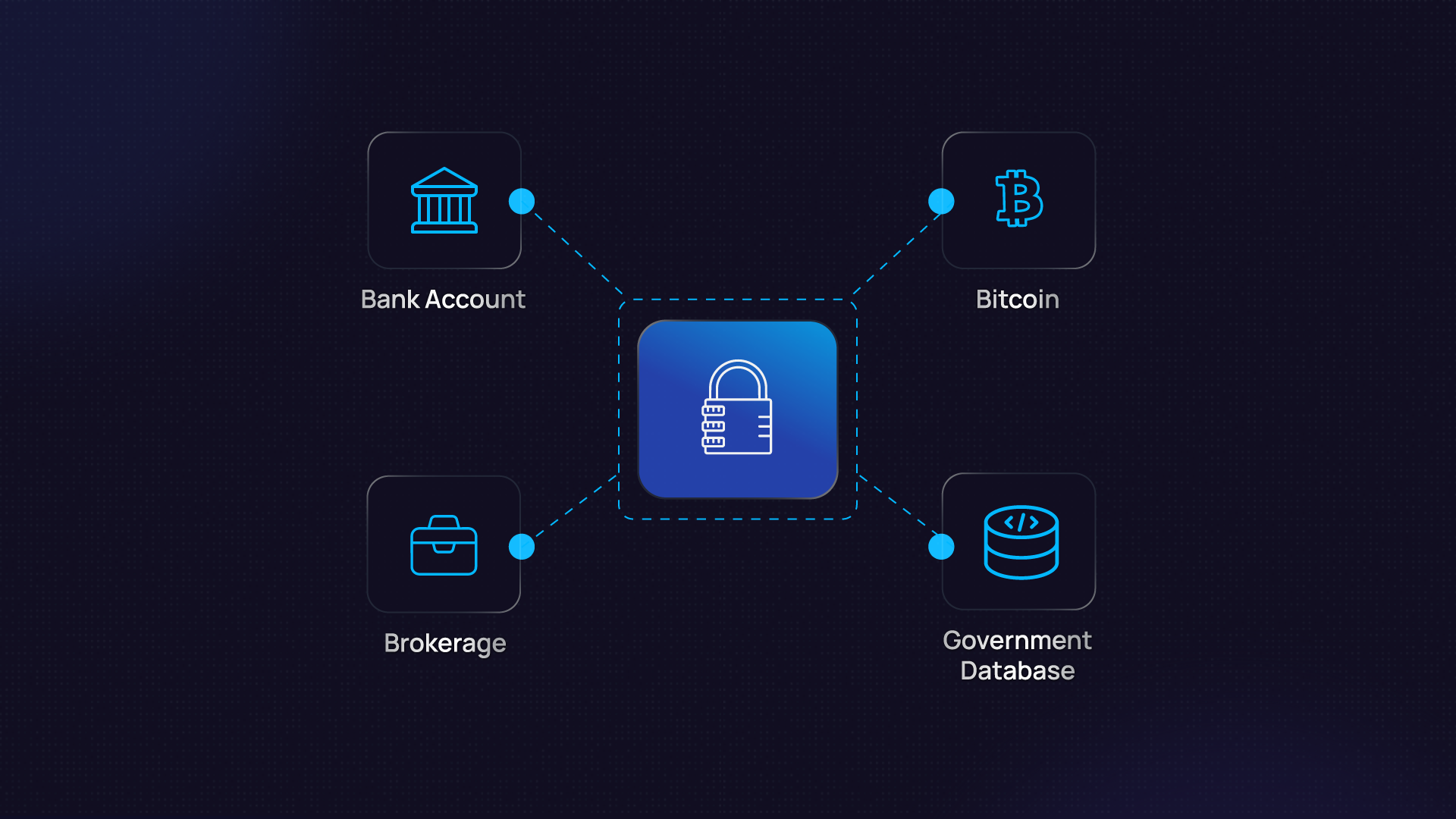
It works because the math required to break it is so complex that even the most powerful computers on earth would take thousands of years to crack it.
Quantum computers change that math entirely.
Instead of processing one calculation at a time, a quantum computer processes millions of calculations simultaneously.
A problem that takes a classical computer thousands of years?
A sufficiently powerful quantum computer solves it in minutes.
That is Q-Day
The moment a quantum computer becomes powerful enough to break the encryption protecting the financial system.
Chris Carroll
Garrett, that sounds like something for the next generation to worry about. Why is this urgent right now?
Garrett Baldwin
Because the timeline just moved. Dramatically.
On March 30th of this year, Google Quantum AI, the Ethereum Foundation, and Stanford University published a joint research paper.
The computing power needed to break modern cryptographic security is approximately
20 times lower than previously estimated.
Twenty times lower than previous estimates.
Every serious institutional timeline moved forward that day.
And the International Monetary Fund has already flagged what this means for global finance.
Quantum computing poses a systemic risk to financial stability. The encryption protecting the global financial system was not designed to withstand quantum-level attacks.
Systemic risk to financial stability.
That is the IMF. Not a fringe researcher. Not a technology blog.
The body that monitors the stability of the entire global financial system.
Chris Carroll
And what does Citigroup say the actual dollar exposure looks like?
Garrett Baldwin
Citigroup ran the numbers.
A single-day quantum attack on one top-five U.S. bank’s access to Fedwire could result in $2.0 to $3.3 trillion in indirect GDP impact, equivalent to 10 to 17% of GDP.
$2 to $3 trillion.
From a single-day attack.
On one bank.
But that’s not just a number on a page.
If your bank is one of the five targeted, your accounts could be frozen for days.
Your retirement savings would become inaccessible.
And not because you did anything wrong...
It’s because the lock on the vault was broken.
Chris Carroll
And what about crypto? Because a lot of people watching this own Bitcoin.
Garrett Baldwin
Well, Bitcoin has a specific vulnerability that most people are not aware of.
Roughly 6.9 million Bitcoin, including Satoshi Nakamoto’s early holdings, are already exposed to future quantum attacks because their public keys are visible on-chain.
There are approximately 6.9 million Bitcoin.
At today’s prices, that’s over $600 billion in potentially exposed holdings.
And a Nobel Prize-winning physicist recently said that people should be thinking about this right now.
You can go to quantum-resistant codes in banking and other systems. Bitcoin is a little bit different, which is why people should be thinking about this right now.
Chris Carroll
Global banking. Crypto. Government infrastructure.
All facing the same fundamental vulnerability.
And the timeline just got moved up.
So who solved it first?
And more to the point for you: who owns it before everyone needs it?
Garrett, go ahead and tell them about the company.
Garrett Baldwin
Before I describe this company, I want to be clear.
I’m not going to tell you its name today.
In 2017, the former head of NATO Intelligence sat down with a small team of engineers.
He told them something that changed everything.
He said: ‘We don’t need to play a better game against cyber criminals. We need to play a different game.’
That meeting gave birth to something we call The NATO Protocol.
The NATO Protocol is a Decentralized Post-Quantum Infrastructure.
Let me show you what they built.
Most cybersecurity systems are centralized.
They have a single point of control.
Which means they have a single point of failure.
Just one successful attack and the entire system is compromised.
The NATO Protocol has no center.
No single point of failure.
It operates as a self-healing security mesh. Thousands of nodes distributed across the network, each one validating all the others.
Every single node in the network validates the others simultaneously, using post-quantum cryptography that quantum computers can’t break.
If a quantum computer attacks one node, the rest of the network instantly isolates it and heals the breach.
It doesn’t just block the attack.
It evolves.
That’s the old game versus the new game.
Old game: build a bigger wall.
Quantum computing breaks walls.
New game: build a system with no wall to break, because there’s no single point to attack.
No wall to break.
No center to attack.
It heals itself.
That is The NATO Protocol in one sentence.
Chris Carroll
Garrett, hold on. Because I want viewers to understand why the old way can’t simply be fixed. Why can’t the banks just patch this?
Garrett Baldwin
That’s the question that made me take this company seriously. So let me answer it carefully.
Every security system you have ever used is a wall. A password is a wall. A firewall is a wall. Encryption is the biggest wall of all.
And for fifty years, the strategy has been the same. When attackers get stronger, build a thicker wall.
Quantum computing does not climb the wall. It makes the wall not exist. The mathematics the wall is built from simply stops being hard.
You cannot patch that. You cannot update your way out of it. The entire architecture has to be replaced.
Chris Carroll
Replaced with what?
Garrett Baldwin
Here’s where it gets urgent. Because the attackers are not waiting for Q-Day.
There’s a strategy in the intelligence world called harvest now, decrypt later.
Hostile actors are stealing encrypted data today. Banking records. Government files.
Personal financial data. They can’t read any of it yet.
They’re warehousing it. Waiting for the day a quantum computer can crack it open.
Which means the theft of your financial life may have already happened. The only thing missing is the key. And the key arrives on Q-Day.
Chris Carroll
So the clock isn’t counting down to when the threat begins. It’s counting down to when a theft that already happened gets cashed in.
Garrett Baldwin
Exactly. Now watch what happens when that same attack hits the mesh.
A quantum-armed attacker targets one node in the network. On a walled system, that’s the ballgame. One breach, total access.
On the mesh, the moment that node behaves abnormally, the thousands of nodes around it detect it. In real time. They isolate the compromised node, cut it out of the network, and re-verify every connection around it using cryptography a quantum computer can’t break.
The attack does not spread. It gets amputated.
And here’s the part that matters for you as an investor. Every institution on earth is about to discover, at roughly the same time, that their walls are worthless.
They won’t be shopping for a better wall. There’s no better wall.
They will be shopping for the only architecture that survives. And there’s essentially one company that has it built, deployed, and battle-tested at scale.
When every buyer needs the same thing at the same time, and one seller has it running, that’s not a technology story.
That creates a seller’s market unlike anything the security industry has seen before. And you can own a piece of the seller before the buyers show up.
Chris Carroll
Garrett, this has been running live since January 2025. What are the real-world results?
Garrett Baldwin
The live numbers are what convinced me this was not theoretical.
Since January 2025:
Over 64 million live transactions processed.
341 million cybersecurity threats mitigated.
On real infrastructure. Not a test environment. Not a simulation.
Live.
And the company’s post-quantum cryptography is built on the standards finalized by NIST, the National Institute of Standards and Technology, the U.S. government’s own cybersecurity standards body.
Chris Carroll
And the funding?
Garrett Baldwin
Over $34 million raised from 33 institutional investors.
Including Tim Draper.
Tim Draper doesn’t make casual bets.
He backed Hotmail before anyone understood web-based email.
He backed Tesla when most people thought electric cars were toys.
He backed SpaceX before a rocket had ever landed itself back on a launchpad.
He is in the company behind The NATO Protocol.
Chris Carroll
And the market this company can protect: $45 trillion.
The entire gold market is $16 trillion.
This market is nearly three times larger.
There’s essentially one company that has built and deployed The NATO Protocol at scale.
Now, what happens historically when one company solves a critical infrastructure problem before the rest of the market catches up? Let me show you.
Chris Carroll
Before Garrett shows you the cybersecurity pattern, I want to show you something.
I’ve spent my career publishing investment research for people like you.
And one pattern shows up more often than any other.
The biggest returns in history didn’t come from the IPO.
They came before it.
Because that’s exactly the position being offered today.
The people who made those returns were not smarter than you.
They were not wealthier than you.
They were in the room before the IPO. That’s the only difference.
A $1,000 pre-IPO investment in Amazon turned into over $107,000 on the day of its IPO.
A $1,000 pre-IPO investment in Google turned into $2,508,500 on the day of its IPO.
A $1,000 pre-IPO investment in Facebook turned into over $2,000,000 on IPO day.
Now. Those are technology companies.
What about infrastructure?
What about the specific category of cybersecurity infrastructure, the pipes that protect the internet, the same category as the company Garrett has been describing?
That’s where the numbers get even more interesting for our purposes today.
Because every one of these companies solved a critical infrastructure problem before the mainstream knew the category existed.
I want to be clear. Past performance is not indicative of future results.
No investment is guaranteed. Including this one.
But patterns matter. And this pattern has repeated itself three times in the last 17 years.
Garrett, walk them through it.
Garrett Baldwin
The most important example for what we’re doing today is Palo Alto Networks.
Because Palo Alto is the only one of the three where we know the pre-IPO number.
Pre-IPO investors paid an average of $1.17 per share.
The stock opened on its first day of public trading at $53.13.
That is 45X.
45X means every $1,000 invested before the IPO became $45,000 on day one.
Every $10,000 became $450,000.
Before the public ever bought a single share.
That’s the number I want you to hold onto.
45X.
Because Palo Alto Networks solved a critical infrastructure problem, network security, before the mainstream knew the category existed.
The company behind The NATO Protocol is solving a critical infrastructure problem, quantum-resistant security, before the mainstream knows the category exists.
Chris Carroll
And Palo Alto was not a one-off.
Garrett Baldwin
The pattern has repeated.
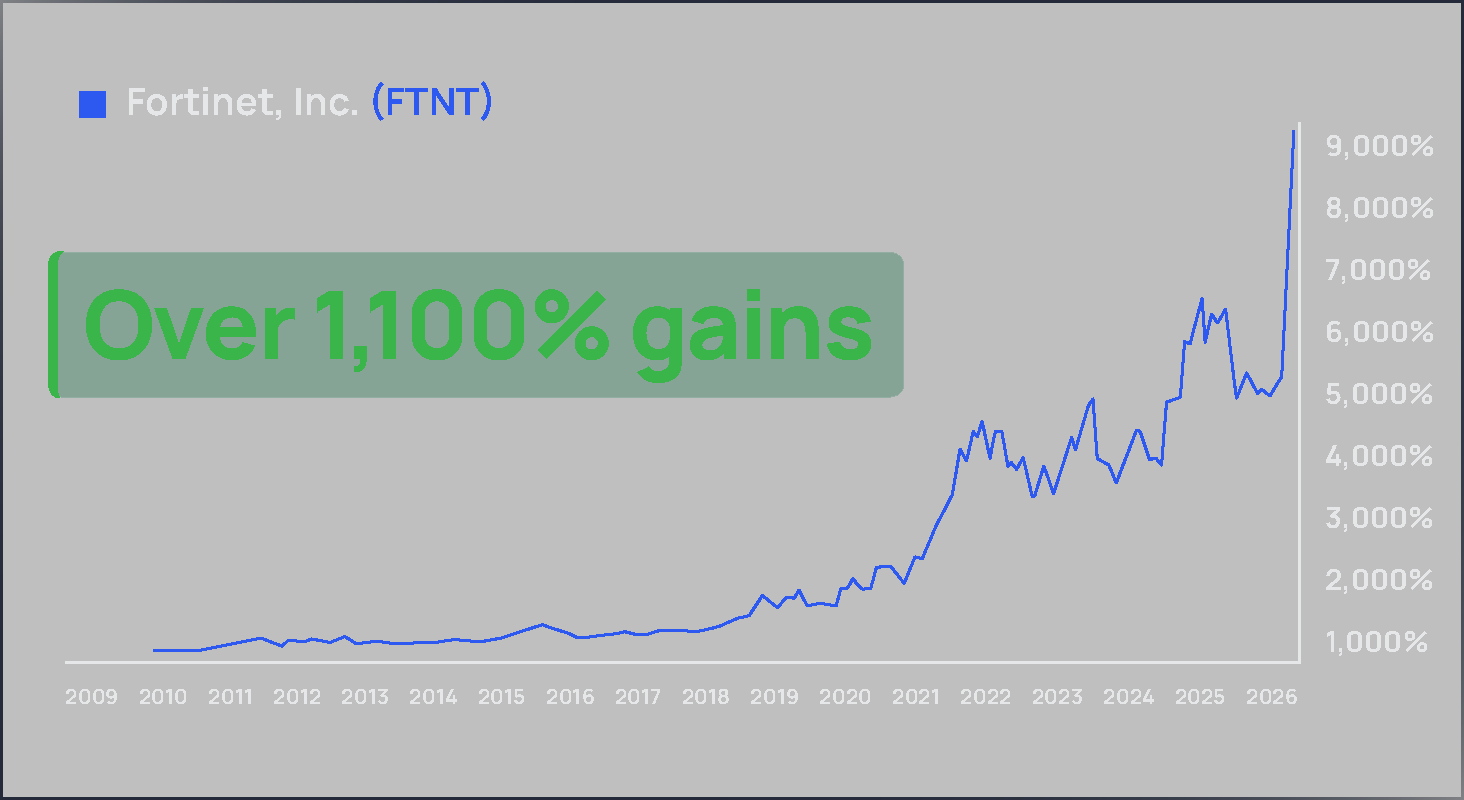
Fortinet went public in 2009 at $12.50 per share.
They had built network security infrastructure for a threat most of the market was not thinking about yet.
From their IPO to today, gains of over 1,100%.

And CrowdStrike.
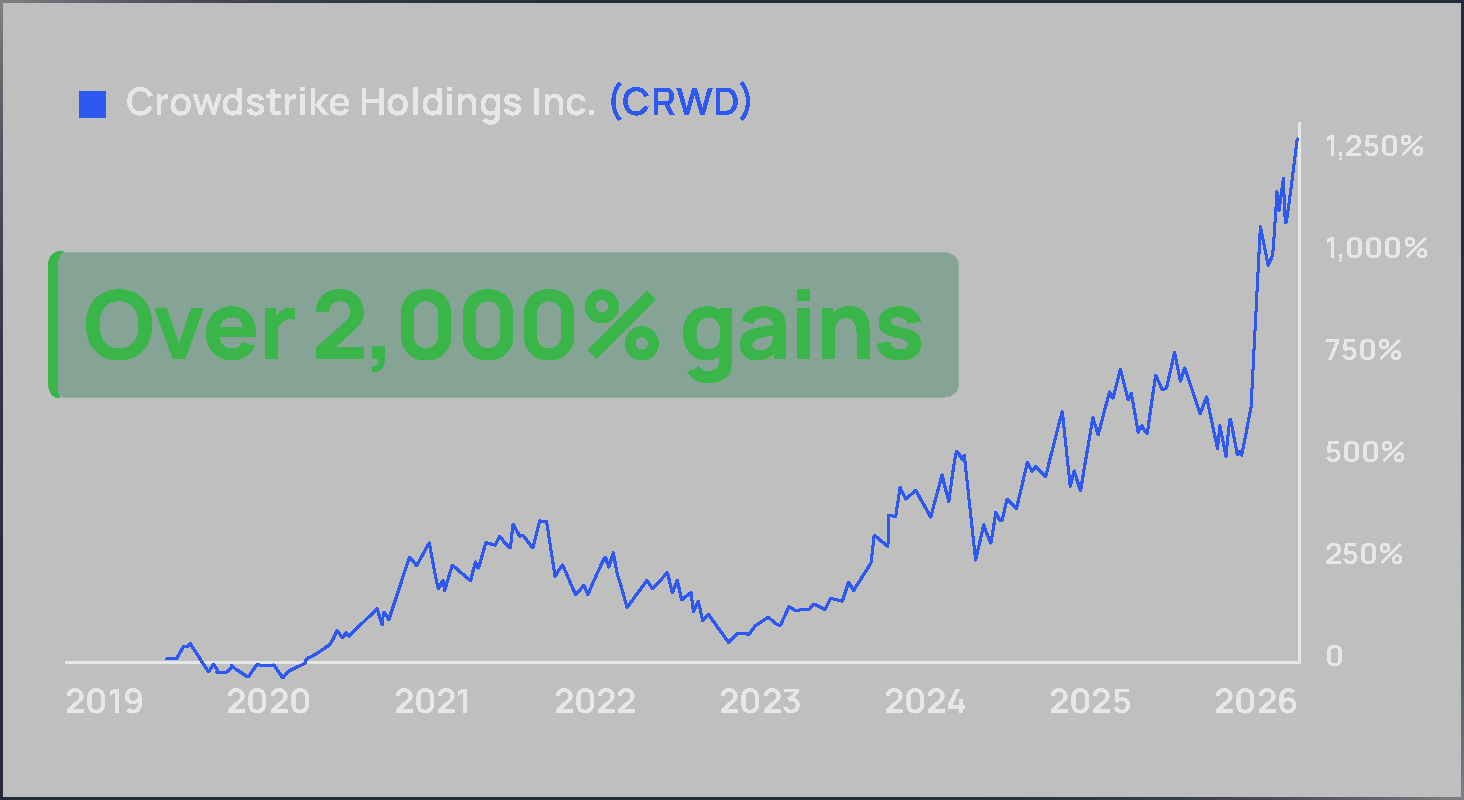
IPO in June 2019 at $34 per share.
Since that IPO, gains of over 2,000%
Chris Carroll
Three companies. Three different eras. Same story every time.
Early investors, especially pre-IPO investors, walk away with life-changing returns.
That pattern is now repeating in quantum security.
The threat is confirmed. The solution is built and deployed. The company hasn’t gone public yet.
And the pre-IPO window has just opened.
Now let me explain why this window exists at all.
Chris Carroll
For decades, ordinary investors could see the pre-IPO returns but couldn’t touch the opportunity.
The Amazon returns. The Google returns. The Palo Alto 45X.
The law didn’t allow it.
Pre-IPO investments were restricted to accredited investors. People with over a million dollars in net worth or income above $200,000 a year.
Everyone else was locked out.
That changed in 2012 when Congress passed the JOBS Act.
For the first time, everyday investors, regardless of net worth, can participate in certain pre-IPO offerings.
You don’t need to be wealthy.
You don’t need a broker.
You don’t need the right connections.
Our private-deal research network was built for exactly this moment.
My team built the process and the deal flow. Then I recruited the people this specific opportunity requires.
The team behind that record is the team behind today’s deal.
Marin Katusa has arranged over $2 billion in private financings and personally scored pre-IPO gains of 1,233% on Uranium Energy Corp and 7,790% on Artemis Gold. When Robert covers a mine, he has walked it with Marin first.
Bob Byrne and Tim Collins run institutional-grade diligence on every opportunity, and most opportunities don’t survive it.
Garrett you’ve already met. He has his own capital deployed in this exact sector, and he has spent hours in the room with this company’s engineers.
Jim Cramer’s response to the quantum threat was to sell. Our team’s response was to find the company solving it, fly to New York, and test it face to face.
This one passed every test we put it through. And based on what happened both times a window like this opened, I wouldn’t plan on this one staying open long.
Chris Carroll
Let me tell you a story no other publisher in this industry can tell.
Earlier this year, our team brought our members a private company we called the 136X Gold Miner.
Members had two weeks before its $30 million financing filled, with readers still trying to get in.
They asked for another chance. So we went back to the company.
Reopening a closed financing required amended federal filings, lawyers, cost, and months of review. The company had every reason to say no. Its raise was already full.
It said yes.
A second $10 million window opened on the same terms. And that allocation filled before our own deadline.
Two windows. Both filled. The second was gone before its deadline even arrived. Every piece of that is documented, and some of you reading this lived it.
I am not telling you this because I expect a second Q-Day window. I do not.
I’m telling you because private companies know this network. They take our calls. They open their doors to our analysts. And when a window opens, our members are positioned to see it early.
And the next one just opened.
But first, Garrett is going to show you exactly why the timing of this specific window is so important.
Chris Carroll
Garrett. Why now?
Why not six months from now?
Garrett Baldwin
Three things are converging right now that make this window extraordinary.
The first catalyst is the acceleration of the threat itself.
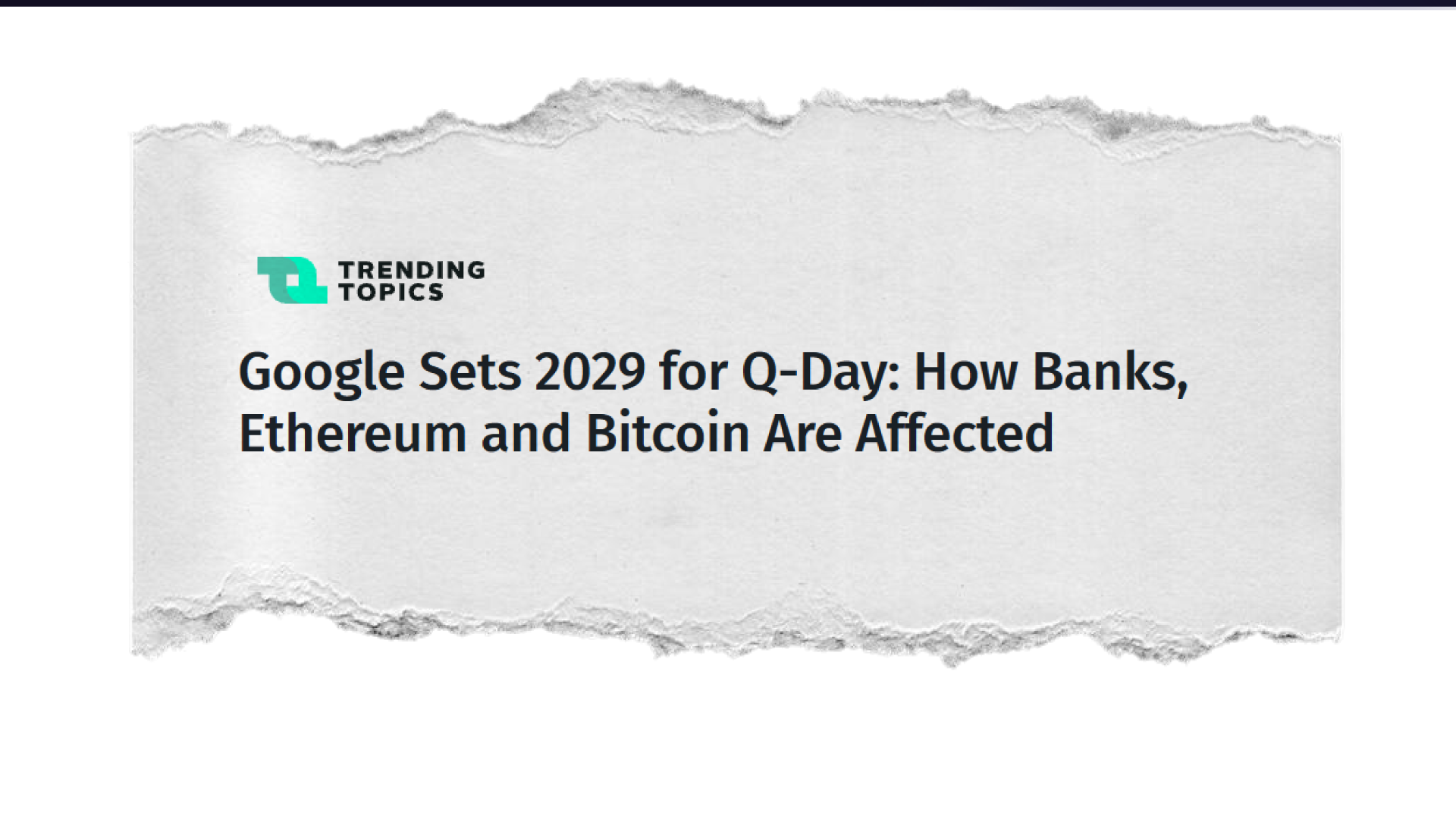
The Google-Stanford-Ethereum paper moved every serious institutional timeline forward. Governments that had Q-Day planning for 2035 are now running emergency reviews for 2029 and earlier.
That urgency translates directly into demand for quantum-resistant infrastructure.
The company that already has it deployed at scale wins the contracts.
There’s one company that already has it deployed at scale.
The second catalyst is regulatory.
In August 2024, NIST finalized the first federal standards for post-quantum cryptography.
NIST has finalized its principal set of encryption algorithms designed to withstand cyberattacks from a quantum computer.
Every U.S. government agency, every defense contractor, every financial institution doing business with the federal government is now required to migrate to these standards.
The company behind The NATO Protocol already meets them.
That is not a future catalyst. That is a current competitive advantage.
And I want to make sure nobody hears ‘government standards’ and tunes out. Because this isn’t paperwork. It’s a forced buying calendar.
The federal government has put its own agencies on a migration schedule, with deadlines.
Think about what that means in dollars. Every agency. Every defense contractor. Every bank that touches federal money. Every one of them is now required to spend money replacing their cryptographic infrastructure.
Not when they feel like it. On a deadline.
Chris Carroll
A mandated market. So the customers are ordered by law to buy the category.
Garrett Baldwin
And it’s not only Washington.
You’ve probably glimpsed the pieces of this story yourself, without knowing they were pieces of the same story.
A headline about China pouring billions into a quantum program the size of a national moonshot. A story about Google or IBM unveiling a chip with a strange name and a number that made the physicists nervous. Maybe a line buried in your own bank’s annual report about “post-quantum readiness,” which you skimmed past because it sounded like IT housekeeping.
None of those felt connected. They are.
Governments are racing to build quantum computers. And every institution that could be hurt by one is quietly being pushed to spend against that day: the banks, the defense contractors, the exchanges, the infrastructure operators.
Think about what that means. The more Beijing spends making quantum computers stronger, the more every bank in New York is forced to spend protecting itself. One side’s arms race is the other side’s shopping list.
The attackers’ budget is the defenders’ invoice.
Chris Carroll
Say that again, because that’s the whole investment case in one sentence.
Garrett Baldwin
The attackers’ budget is the defenders’ invoice. The more the world spends building quantum computers, the more every institution on earth is forced to spend protecting itself from them. And the company positioned to collect that spend is the one we have been describing.
The third catalyst is one most people haven’t connected yet.
AI is speeding up quantum computing development.
AI is accelerating the development of quantum computing and forcing the crypto industry to prepare for a future where today’s encryption systems may no longer be reliable.
Chris Carroll
And the World Economic Forum has already issued its verdict on what institutions must do.
Organizations must begin transitioning to quantum-resistant cryptography immediately.
Garrett Baldwin
Immediately.
Not eventually. Not when the threat arrives.
Now.
These three catalysts, accelerating threat, government mandate, AI acceleration, are all converging at the same moment.
And the investment window into the only company positioned to capture all three has just opened to our members.
Chris Carroll
Garrett, before we show them the company profile, give people a way to think about the size of this. Because $45 trillion is a number so big it stops meaning anything.
Garrett Baldwin
Fair. So let’s make it small.
$45 trillion is the value of what needs protecting. Nobody captures that. What companies capture is the spend on protecting it.
Global cybersecurity spending already runs to hundreds of billions of dollars a year.
The post-quantum migration is a new layer on top of that, mandated, on a deadline, across every institution at once.
Now be deliberately, almost insultingly conservative.
Assume the company we have described captures a fraction of one percent of that migration. Not dominance. Not victory. A sliver.
A sliver of a mandated, deadline-driven, global replacement cycle, flowing to a company that raised $34 million and hasn’t gone public yet.
That’s the shape that produced Palo Alto’s 45X. A small private company, a category the mainstream hadn’t priced, and a wave of forced spending arriving on schedule.
I’m not promising 45X. Nobody can promise that, and past performance is not indicative of future results. What I’m showing you is that the arithmetic doesn’t need heroic assumptions. The sliver is enough.
The heroic assumption is believing the world will NOT be forced to migrate.
Garrett Baldwin
Let me tell you everything I can about this company.
Without the name.
Chris Carroll
Don’t worry, the name is in the research report. And there’s a practical reason we handle it this way.
If this video gets shared widely before our audience has a chance to act, early visibility can affect the pre-IPO allocation process.
A company with 33 institutional investors doesn’t need retail attention, but it chose to open an allocation to everyday investors anyway.
But here’s everything else…
Garrett Baldwin
The Origins.
Founded in 2017 following a closed-door meeting between its engineers and the former head of NATO Intelligence.
The same meeting that gave birth to what we call The NATO Protocol.
The Scale.
Over 64 million live transactions processed on real infrastructure since January 2025.
The Battle-Testing.
341 million cybersecurity threats successfully mitigated.
On live systems. Not simulations.
No wall to break. No center to attack. It heals itself.
The Validation.
Post-quantum cryptography built on the federal standards finalized by NIST, the U.S. government’s own cybersecurity standards body.
The Backing.
Over $34 million raised from 33 institutional investors, including Tim Draper, who backed Tesla, Skype, and Hotmail before any of them were household names.
Let me add something the documents can’t tell you.
I’ve been in the room with this company. At NASDAQ. In New York. With two more of our analysts beside me.
The people building this are not promoters. They’re engineers and cryptographers solving a problem governments are quietly desperate about.
That’s what we saw.
And what struck all of us was not the pitch.
It was that there was no pitch.
Engineers and cryptographers answering technical questions for hours. That is not how promoters behave.
That is how builders behave.
The only thing we’re not showing you is the name.
Because that’s in the report.
Chris Carroll
Garrett, one more thing before we share the opportunity, because this is the question I ask about every company that crosses my desk. The threat is real. The technology works. How does this company make money?
Garrett Baldwin
This is my favorite part, because the business model is as elegant as the technology.
Think about how the mesh works. Every device that joins the network becomes a node. Every node is both protected and protecting.
The company gets paid when a buyer purchases a product or license.
Every new place, node, customer, or trade expands the network and creates another unit of billable protection.
That’s why this is infrastructure play. It isn’t a product a customer buys once and forgets. It’s a security expense that continues as long as the customer stays connected.
Chris Carroll
So the investment case is not simply that Q-Day creates fear. It creates a recurring bill, and this company is positioned to send it.
And the pre-IPO position means you would own a piece of the booth before the traffic arrives.
And the report is yours when you join us today.
Let me show you exactly what that means.
Chris Carroll
Our research network is called The Venture Network.
When you join The Venture Network today, here’s what you get.
I’m going to put a dollar value on every piece.

First. Your primary research report.
Inside: the full company profile for the NATO Protocol company. The name. The investment platform.
The exact step-by-step instructions, so you’re ready the moment the allocation opens.
Plus Garrett’s complete sector analysis: the threat timeline, the competitive landscape, and why this specific company is positioned to dominate the $45 trillion quantum security market.
Value: $499
Second. The nine-part pre-IPO investment video series.
We walk you through the complete investment process step by step. How to open an account. How to evaluate the offering documents. How to size your position. Every detail, in sequence.
This is the same process institutional investors pay thousands of dollars to learn.
Value: $997
Third. Twelve months of full Venture Network membership.
Our team identifies and analyzes the most compelling private deal opportunity available to everyday investors.
Our target: 10X potential on every private deal we bring you.
The team behind these recommendations includes Marin Katusa, pre-IPO gains of 1,233% from Uranium Energy Corp and 7,790% from Artemis Gold. Over $2 billion in private financings arranged. New York Times bestselling author.
And Bob Byrne and Tim Collins, institutional-grade due diligence on every opportunity before it reaches you.
Value: $2,495
Fourth. Full access to Kiyosaki Uncensored and Freedom Financial News.
Add it all up.
$4,491 in total value.
But you won’t pay $4,491.
You won’t pay half that.
Your investment today: $1,495
To keep the scale in perspective: a separate $1,000 pre-IPO investment at Palo Alto’s 45X multiple would have been worth approximately $45,000 on opening day. Past performance is not indicative of future results.
Your Venture Network membership doesn’t purchase shares. It gives you the research, the company details, and the step-by-step instructions you need to decide whether, and how much, you want to invest separately.
For a full 12-month membership.
Less than $130 a month.
For a year of private-market research, deal analysis, and step-by-step guidance from a team that has already sat across the table from this company.
One thing I need to be direct about.
The Q-Day research report gives you the research, the company details, the risk analysis, and the step-by-step instructions for the pre-IPO allocation.
That allocation is finite.
When it fills, it closes, regardless of the date on the calendar.
And I don’t have to speculate about that. I can show you.
You saw what happened with the 136X Gold Miner. Two windows. Both filled. The second was gone before its deadline even arrived.
Some of our own readers missed the first window, not because they decided against it, but because they were not positioned when it opened.
That’s why membership matters here. Venture Network members get access the moment the window opens.
No other publisher can offer that, because no other publisher has this standing.
That is not a marketing tactic. That is documented history.
And your decision is protected by the 90-Day Venture Network Credit Guarantee.
Take 90 days to evaluate The Venture Network research, recommendations, and member experience.
Read the Q-Day research report. Follow the monthly recommendations. Watch the investment video series.
If you’re not completely satisfied, contact Member Services. We’ll issue a credit equal to your purchase price, applicable toward another Freedom Financial Research service, product, or event.
This is a credit guarantee, not a cash-refund guarantee. Full terms appear on the order page.
So here’s where we are.
The threat is documented. The company is real, running, and backed by people who don’t make casual bets. The window is now open, and Venture Network members will be standing at the front of it.
Which means you have a choice to make. And it’s the same choice this presentation opened with.
You can step into the room: the place where deals like this get seen early, vetted hard, and acted on before the headlines arrive. The world Robert has been writing about for thirty years, where wealth gets built before the crowd shows up.
Or you can close this page, go back to buying whatever the crowd is buying, and meet this company for the first time on the day it goes public.
The last time this network opened a window, the people who hesitated are still emailing us about it.
If you want in, here’s exactly what happens next.
Click the button below. The signup takes minutes. And the moment your enrollment is confirmed, the Q-Day research report I’ve reserved for you lands in your inbox: the company’s name, the platform, and the step-by-step walkthrough, so you’re ready the moment the allocation opens.
Welcome to The Venture Network. I look forward to having you inside.
Now, as you sign up, I’ll answer the questions I know are in your mind. The same questions and answers appear on the signup page, so if you’d rather read them there, click the button now and read as you go.
YES - I’M IN. CLAIM MY SPOT NOWBefore you click the button, I know there are questions in your mind.
So let me answer them the way I would want them answered. Straight.
“Isn’t pre-IPO investing only for the rich and connected?”
It used to be true.
For decades, pre-IPO investments were legally restricted to accredited investors.
The JOBS Act changed that.
The SEC’s Regulation A framework created a legal pathway for everyday investors to participate in certain pre-IPO offerings regardless of net worth.
This investment is structured within that framework.
Fully compliant. Fully above board.
“What is the risk here, really?”
I won’t tell you there’s no risk. There is.
Pre-IPO investments carry more risk than buying shares in a large established company. The potential reward reflects that asymmetry.
What I can tell you is this.
This company isn’t a concept. Not a pitch deck.
It’s a live, operational business. 64 million transactions. 341 million threats mitigated. Built on the NIST post-quantum standards. Backed by Tim Draper.
That doesn’t eliminate risk.
But it’s a very different risk profile from a startup at an idea stage.
“Am I too late?”
The company hasn’t gone public yet.
You’re not late.
Right now, today, you’re in the same position that Palo Alto investors were in before the IPO.
Before the 45X.
The public doesn’t know this company’s name yet.
That’s not a problem. That’s the point.
“How complicated is this to actually do?”
Simpler than opening a brokerage account.
A few questions to verify your identity and eligibility. Select your investment amount. Most people complete the entire process in under 10 minutes.
No broker. No phone call. No paperwork to mail.
Garrett and I walk you through every step in the nine-part video series.
“What does your company get out of this?”
Fair question. I would ask it too.
We’re a research publication. Memberships are the only money we make. Not commissions, not marketing fees, nothing from the company, nothing from the investment platform.
Which means our incentive is brutally simple. We only grow if the research is good enough that you renew. We don’t get paid when you invest. We get paid when we’re right.
Robert told you his relationship with this publication himself, in his own words, at the start. And you noticed what he didn’t do. He didn’t tell you to invest. Around here the research has to earn that on its own.
Every card is on the table.
Now let me show you the only decision that actually matters today.
Chris Carroll
I want to show you two futures.
Picture yourself 18 months from now.
In the first future, you took action today.
You were in the window when it opened.
Q-Day has arrived in the mainstream headlines. Institutional money is flooding the quantum security sector. Analysts who ignored this category for years are now calling it the defining infrastructure investment of the decade.
And the company you invested in, the one with no wall to break, no center to attack, the one that heals itself, is now one of the most talked-about IPOs in the technology sector.
You remember the number.
45X.
That’s what Palo Alto’s pre-IPO investors walked away with.
And you wonder if your number will be even bigger.
You look at your portfolio.
You look at your family.
You think back to this moment.
The day you had the information.
The day you made the decision.
Best decision you ever made.
In the second future, it’s the same moment.
The headlines are the same. The IPO is the same.
But you’re on the outside looking in.
You remember watching this video.
You remember Jim Cramer selling his Bitcoin on television. You remember thinking: I know something he doesn’t.
You remember that the last deal filled with people still trying to get in. And you told yourself you had time.
You understood the thesis.
You had the information.
But you waited just a little longer than you meant to.
And the window closed before you walked through it.
I’ve spent my career around successful investors and the people who publish for them.
You know what almost none of them regret? The bets that went wrong.
What they regret are the windows they saw clearly and didn’t walk through.
Robert Kiyosaki
Hey. It’s Robert again.
I told you at the start that I would not tell you to invest. I meant it.
But I’ll tell you what fifty years of studying money has taught me.
Every fortune I’ve studied began when somebody saw a system changing before the crowd did.
Gold at thirty-five dollars an ounce. Real estate after a crash. The asset changes. The principle does not.
Chris and his team have shown you what they found. Now read the offering documents. Decide what risk you can afford. And make your own decision.
Chris, take them home.
Chris Carroll
This is the moment where you decide.
Garrett and two of our analysts were inside NASDAQ before the headline.
Today, you can act before the IPO. Before the headlines. Before the crowd.
Or you can wait and read about it afterward.
On the next page, you can review the complete Venture Network package and the full terms of the 90-Day Venture Network Credit Guarantee.
When your enrollment is confirmed, you receive immediate access to the Q-Day research report, the nine-part investment series, and twelve months of Venture Network research.
The allocation is now open to our members. It’s finite and first-come, first-served.
Chris Carroll
One more thing.
There’s a story I think about every time I evaluate a pre-IPO deal.
When Palo Alto Networks was still private, before the 45X, some of the early investors sold their shares.
Not because the company was failing. Because they got impatient. Because the window felt too long. Because they convinced themselves the opportunity was not real.
They sold at three dollars. Five dollars. Eight dollars a share.
The stock opened at fifty-three.
They had the position. They had the information. They had the access.
And they talked themselves out of it.
I’ve spent my career watching what separates the investors who win from everyone else.
It’s not intelligence. It’s not wealth. It’s not connections.
It’s the willingness to stay in the room after you have entered it.
The window is open.
Do not leave the room.
I’ll see you on the inside.
This is your chance. Click the button below to get started.
“Poor dads wait for the IPO. Rich dad was there years before. Poor dad celebrates a 17% gain. Rich dad counts how many times he multiplied his money. This is your chance to play on a completely different field.”
— Robert Kiyosaki, Author of Rich Dad Poor Dad